
Eastpointe Breaks Ground on New Police and Court Building Designed for Future Growth
Posted on August 3, 2026
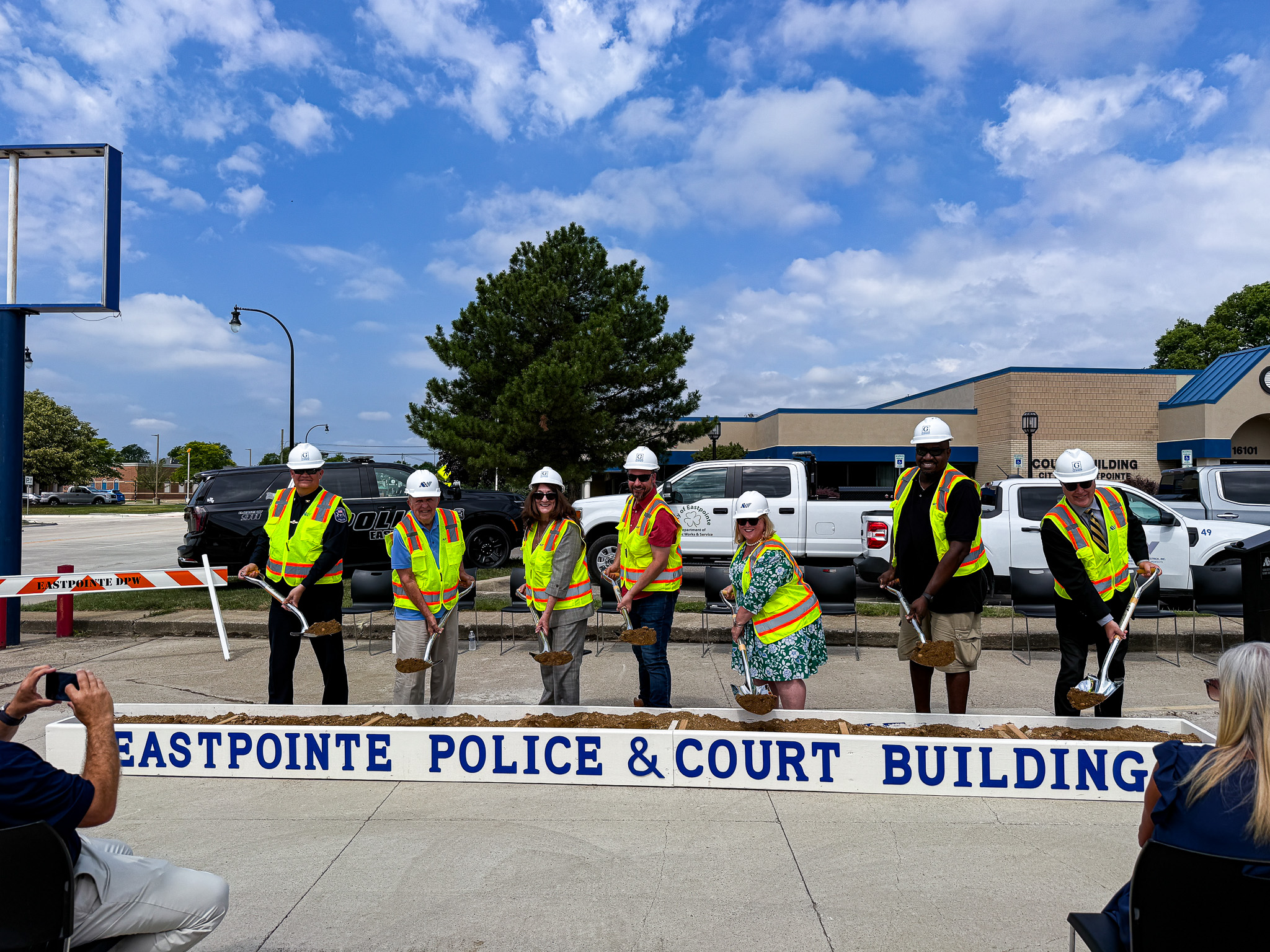
The City of Eastpointe recently broke ground on a new police and court building that will modernize public safety operations, improve security, and support future growth.
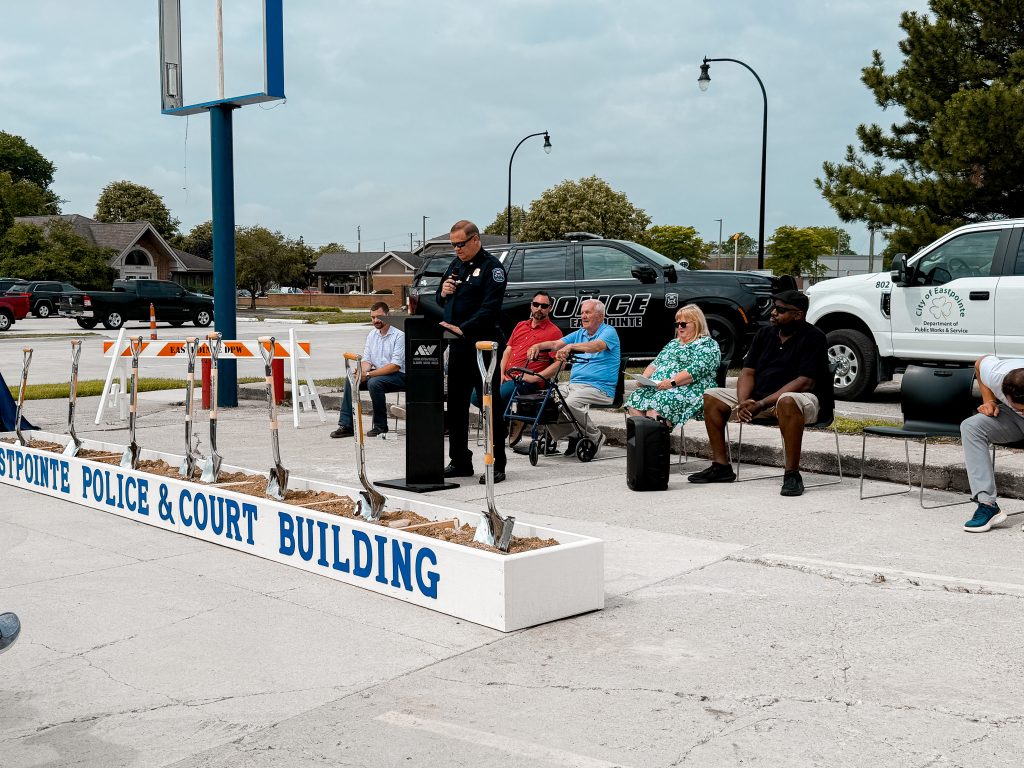
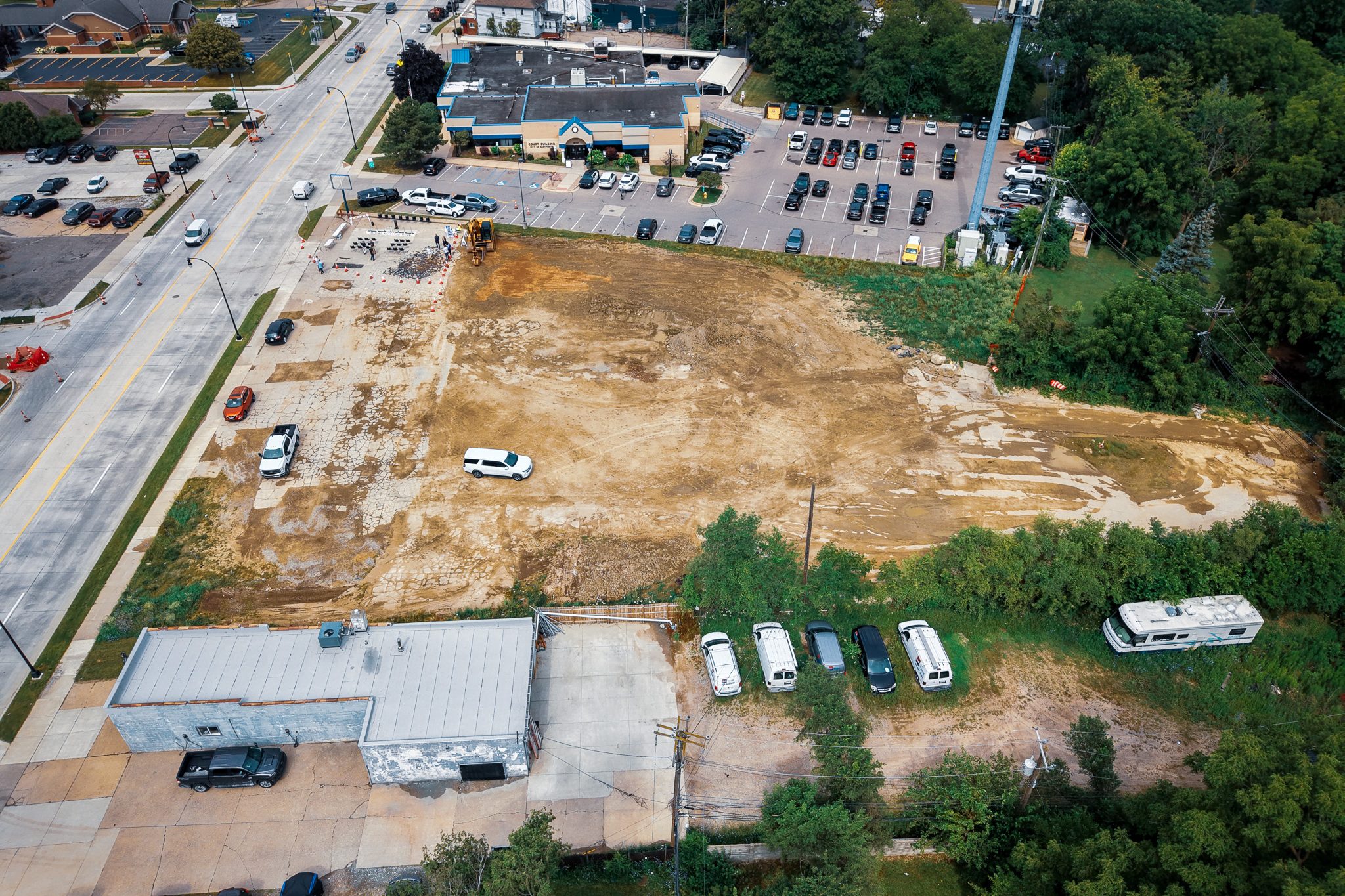
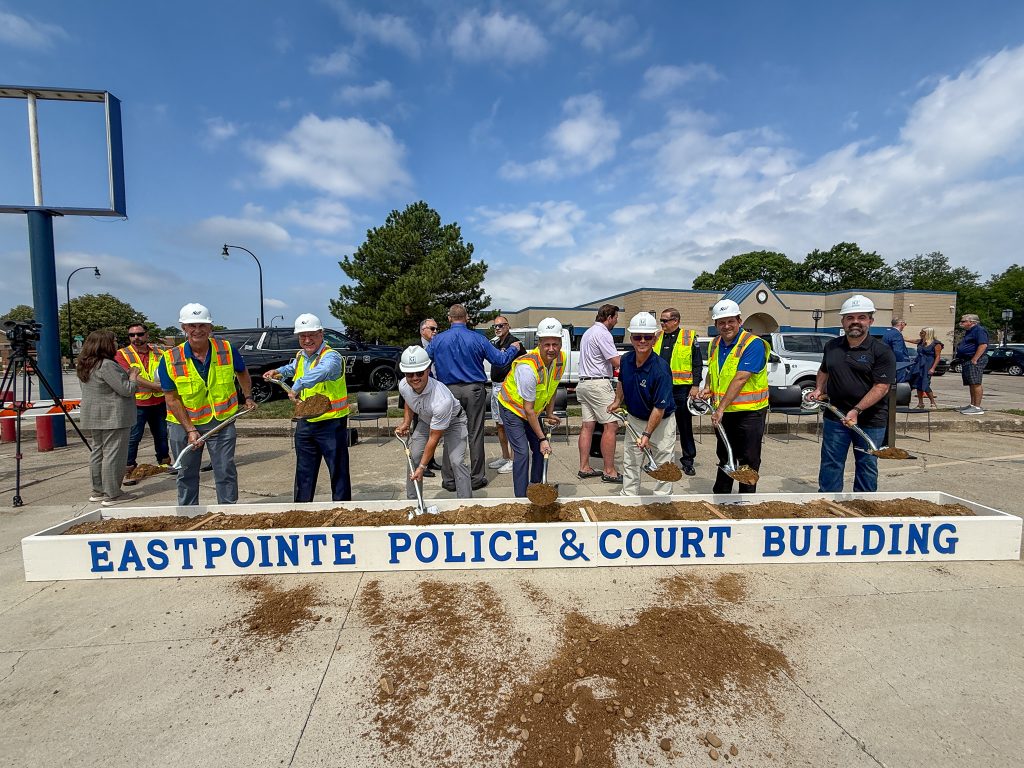
During a July 10 groundbreaking ceremony, city officials joined representatives from Anderson, Eckstein & Westrick (AEW); C.E. Gleeson Constructors; and the general public at the construction site at 16083 E. Nine Mile Road to celebrate the start of a project years in the making.
The new facility will replace Eastpointe’s existing police and court building, which is more than 65 years old and houses the 38th District Court. According to Eastpointe Police Chief Corey Haines, the aging facility has become increasingly expensive to maintain, with ongoing issues involving plumbing, HVAC systems, roof repairs, and asbestos mitigation.
“In the current building we are spending thousands of dollars per year just trying to maintain the plumbing system and the HVAC system,” Haines said. “These systems are extremely old and are difficult to find parts to repair them with.”
Haines added that the current building’s layout no longer meets the operational needs of modern police and court services.
Court Administrator Jennifer Lada said the court faces many of the same challenges, noting that the facility no longer adequately supports the volume of visitors or the way court operations function today.
“From the Court’s perspective, we’ve simply outgrown the building,” Lada said. “We’re trying to provide quality public service in a building that just doesn’t have the space or layout to support it.”
The estimated $22 million project is being funded through a combination of a state grant and a $10 million bond. Approved by the Eastpointe City Council in 2025, the project is expected to take approximately 18 months to complete.
Designed by AEW, the new two-story, approximately 44,000-square-foot building will facilitate the City’s current and future needs.
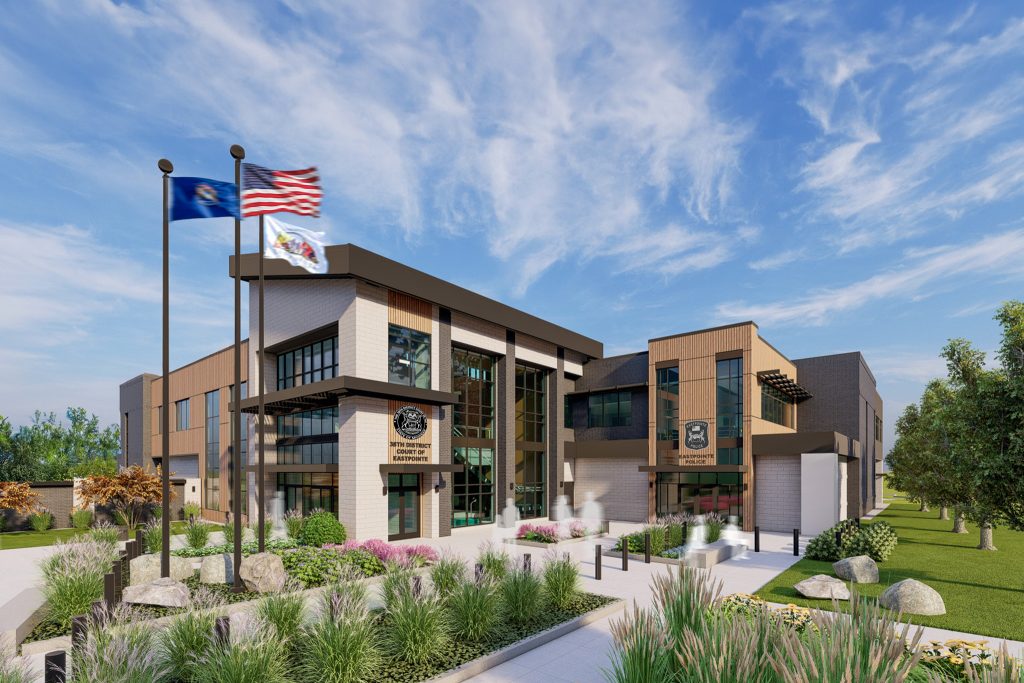
The first floor will serve as the new home of the Eastpointe Police Department, providing more room for administration; patrol operations; training, investigations; supervision; evidence processing and secure storage; locker facilities; and other support functions. On the second floor, a bigger 38th District Court will have two modern courtrooms in place of the existing single courtroom, along with additional judicial offices and staff workspaces.
In short, the new Eastpointe facility promises to be more efficient and accessible for both City employees and visitors. The project’s vision balances law enforcement security and operational needs with fostering a welcoming environment. The building also represents a long-term investment in the City by being adaptable enough to evolve with changing technology, staffing needs, and community expectations.
Lada said the new facility will provide updated technology, improved accessibility, enhanced security, and room for future growth, including space to accommodate a second judge if needed.
A separate firearms training range is also planned for the site. According to Haines, the standalone facility will feature dedicated ventilation systems, improve safety, reduce disruptions within the main building, and allow more officer training to occur during regular work hours.
One of the project’s biggest challenges was ensuring public services could continue uninterrupted during construction.
“This project required several unique considerations,” said AEW architect Matthew Berge, AIA. “One being the desire to keep the existing court/police station in operation throughout the construction so that services to the community were not disturbed.”
Security was another major design priority. Berge said the facility includes secure parking areas, separate circulation routes to minimize contact between victims and defendants, and controlled detainee transport systems that keep detainees separated from court and police staff areas.
To create a more welcoming civic environment, the design incorporates clerestory openings that bring natural daylight into the courtrooms “so that the spaces would feel less like caves and more like grand civic spaces,” Berge added.
The project team also prioritized accessibility and convenience for residents. The completed facility will provide additional parking and a centralized entrance that offers easier access to both police and court services.
“The building will be a vast improvement for residents as there will be more parking available once the build is complete,” Haines said. “They will be able to enter the building at the front and enter either the Court or the PD.”
Lada said the new facility will also significantly improve the public’s experience. The current lobby often becomes crowded as visitors check in, pay fines, ask questions, and conduct court business.
“The new building gives people room to conduct their business without feeling like everyone around them is part of the conversation,” Lada said.
She added that the new layout will make it easier for visitors to find their destination, creating a clearer path from the front entrance to either court or police services.
Berge said the design reflects Eastpointe’s identity as “A Family Town” and recognizes that courts and police facilities serve residents during both difficult and meaningful moments.
“We sought to create a space that would make the citizens of Eastpointe proud for decades to come,” Berge said.
The project also supports the City’s broader vision for the Nine Mile Road corridor by incorporating outdoor spaces and site features that complement future development plans.
The groundbreaking marks the culmination of years of planning and collaboration among AEW, city staff, elected officials, and the community.
Eastpointe City Manager Ryan Madis said the new facility will improve efficiency, accessibility, and the delivery of public services for years to come. “This investment represents a priority for the City because it strengthens our ability to deliver high-quality public services while creating a space that better meets the needs of our community,” Madis said.